

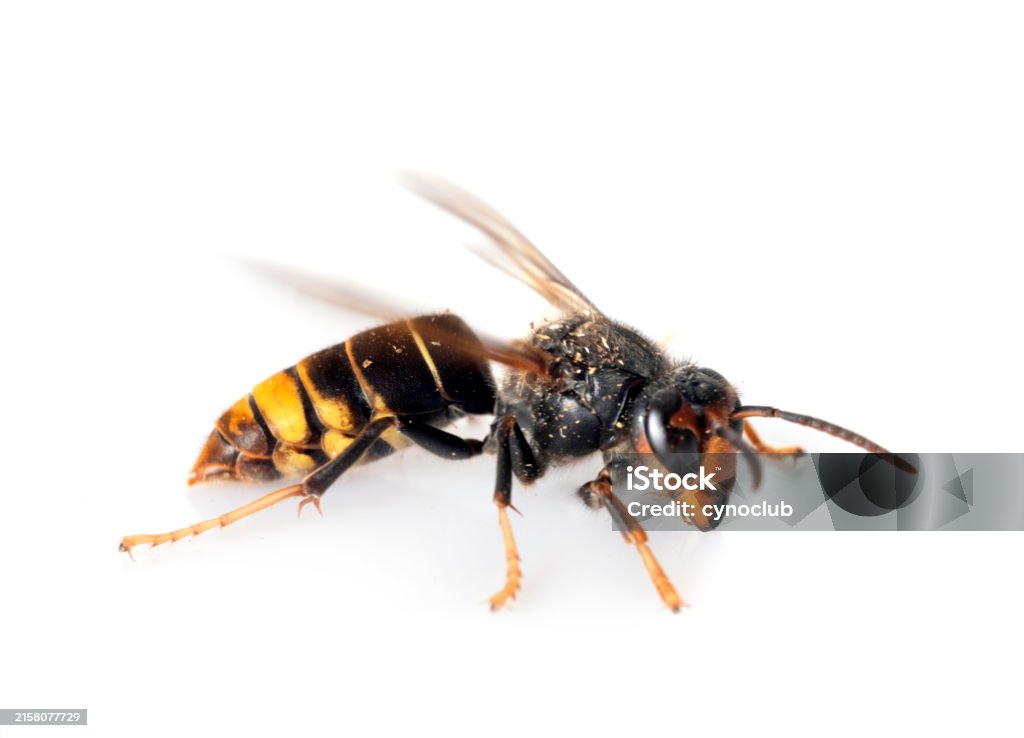

Student team develops innovative ‘Trojan horse’ in the fight against the Asian hornet
An interdisciplinary team of students from the Vrije Universiteit Brussel (VUB) is taking part in iGEM, the international synthetic biology competition in Paris (Nov. 13–16), this fall. Using a clever combination of artificial intelligence, a mechanical trap and protein nanofibers, they are presenting a targeted method to efficiently control populations of the Asian hornet.
The Asian hornet poses an ever-increasing threat to local European biodiversity and the bee population. As existing hornet traps often catch only a few individuals and the queen continues to lay eggs in the nest, the current approach offers little in the way of a satisfactory solution. Furthermore, traditional chemical pesticides cause damage to the wider ecosystem.
Driven by AI, spread by the hornet
The VUB team has developed a solution using a biological insecticide deployed according to the “Trojan horse” principle. The innovation combines three elements into a targeted platform:
- Smart AI identification: As the biological pesticide is not naturally selective, an AI-driven detection system recognizes, with over 99% accuracy, whether the trapped insect is an Asian hornet. This prevents beneficial insects, such as honeybees, from coming into contact with the agent.
- Specific adhesion via nanofibers: Once inside the trap, the hornet is fitted with a biological “sticker” consisting of a network of protein nanofibers equipped with chitin-binding domains, ensuring they adhere optimally to the insect’s exoskeleton. The sticker contains the natural soil fungus Beauveria bassiana, a recognized natural pesticide in agriculture.
- Targeted nest control: Upon release, the hornet returns to the colony, which is then infected with the insecticidal fungus. In this way, the entire nest is tackled from within without harmful side effects for the environment.
A scalable platform for the future
The project goes beyond simply controlling the Asian hornet. Thanks to its modular design, the system offers a universal platform that can be adapted to other invasive species or pests that are becoming more prevalent due to climate change.
Alongside scientific development, the team emphasizes community engagement and education. For example, the students organized workshops on AI and synthetic biology for elementary and secondary schools. In synthetic biology, biological processes and materials are combined to create new technological developments with societal applications.
On Oct. 21, all protocols and results were made publicly available. The team will present the project at the Grand Jamboree in Paris, the culmination of the renowned iGEM competition.

